
Logistics Software Development: A Technical Guide to Architecture, Features, and Build-vs-Buy Decisions
April 7
Published

Nazar Verhun
CEO & Lead Designer at MyPlanet Design
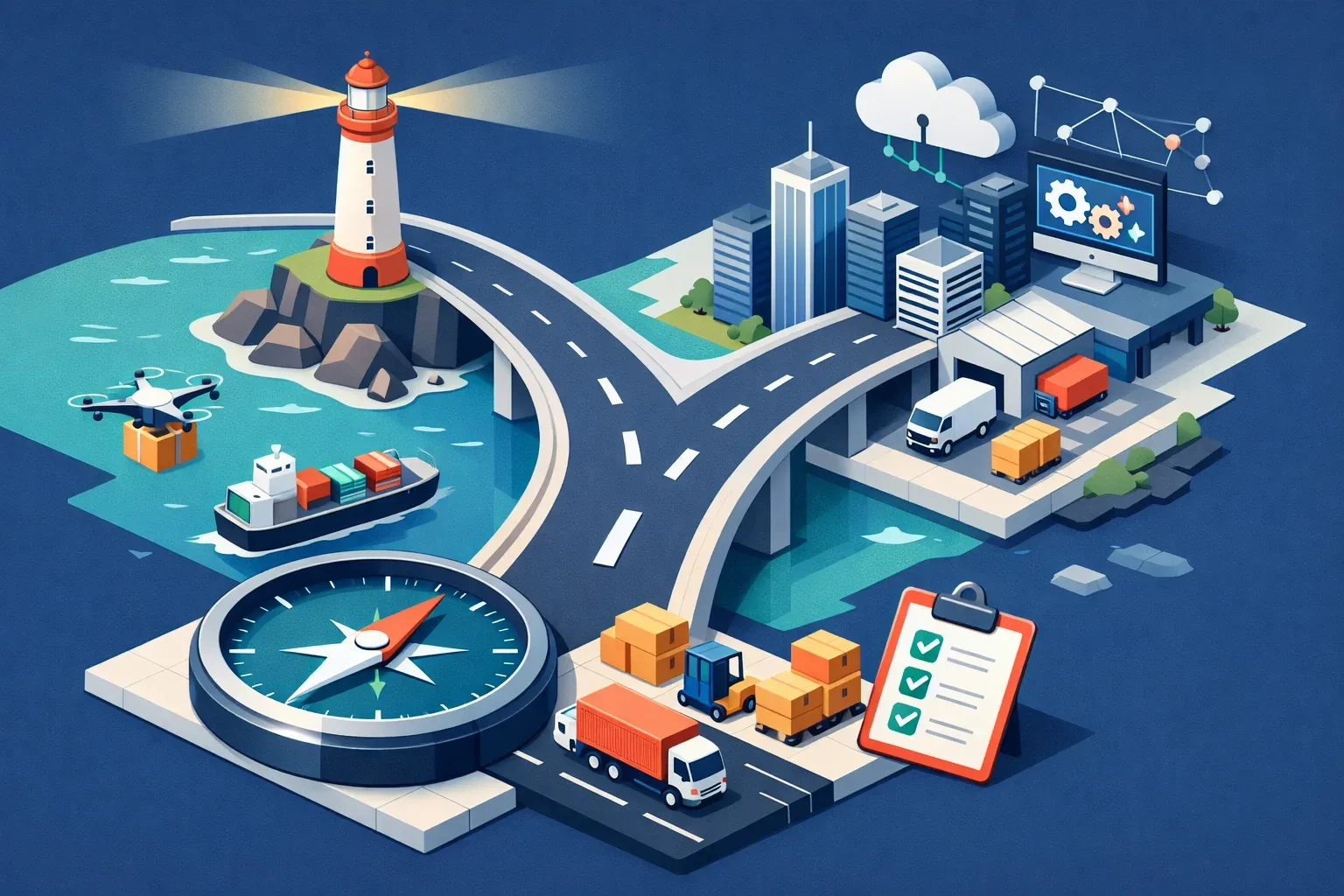
Logistics software development explained: key features, architecture patterns, cost benchmarks, and build-vs-buy criteria to modernize your supply chain op
Most logistics platforms don’t fail because someone picked the wrong features. They fail because the architecture couldn’t handle what happened at month eighteen — when order volumes tripled, a third carrier API needed integrating, and the warehouse management module started choking on concurrent inventory writes. We’ve seen this pattern repeat across dozens of engagements: teams that treat logistics software development as a feature checklist end up rebuilding from scratch within two years.
Here’s the uncomfortable truth about this space in 2026: the global logistics software market is projected to reach $17.5 billion by 2027, according to Allied Market Research, yet roughly 70% of custom logistics builds exceed their original budget. The gap isn’t ambition — it’s architectural planning. When you’re dealing with real-time GPS streams, multi-tenant warehouse operations, and event-driven shipment tracking across time zones, you’re not building a CRUD app. You’re engineering a distributed system with all the complexity that implies.
A client in freight forwarding once told us their off-the-shelf TMS “worked fine” until they expanded into cross-border routes with customs holds. Within six months, they’d sunk €400K into workarounds that a properly designed event-sourced architecture would have handled natively. That’s the kind of expensive lesson this guide is built to prevent.
What actually matters? Technology stack decisions — Kafka vs. RabbitMQ for event streaming, PostGIS for geospatial queries, CQRS for separating read-heavy tracking from write-heavy dispatch — and understanding exactly when building custom is worth the investment versus buying and extending an existing platform.
Key Takeaways:
– Logistics software is fundamentally a distributed systems challenge — architect for event-driven communication, not monolithic feature modules.
– Technology choices like Kafka, PostGIS, and CQRS patterns should be driven by specific operational constraints, not industry hype.
– Build-vs-buy isn’t binary: the most cost-effective path for mid-size operators is often buying core TMS/WMS and building custom integration and visibility layers.
– Real-time tracking, route optimization, and multi-carrier orchestration each impose distinct infrastructure requirements that must be addressed at the architecture level.
– Budget overruns in logistics platforms trace back to underestimating data volume growth and integration complexity — plan for 3× your launch-day throughput from day one.
What Does Logistics Software Development Actually Involve in 2026?
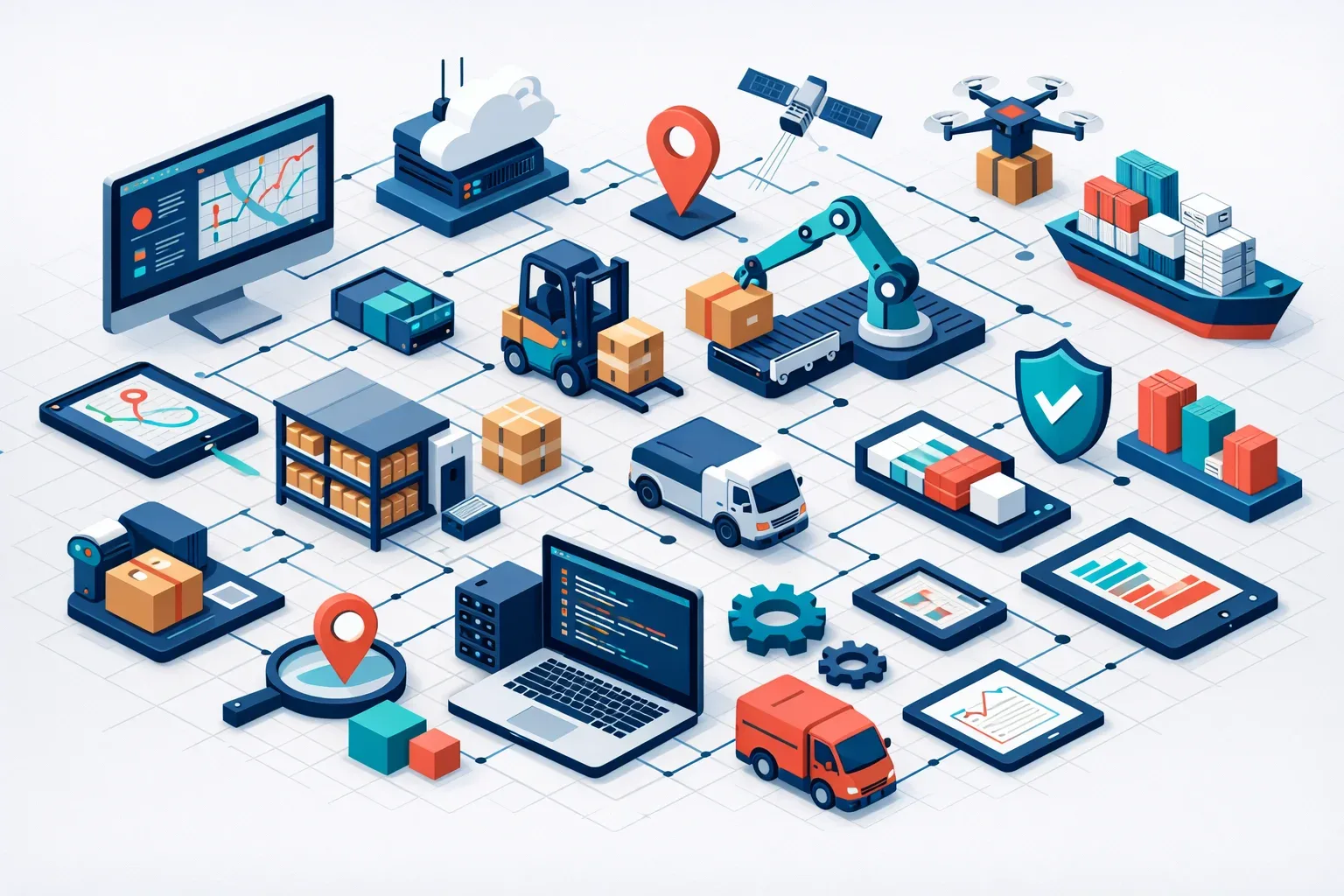
Logistics software development in 2026 spans six core module categories, each with distinct architectural demands and integration surfaces. Understanding what you’re actually building — before writing a single line of code — separates teams that ship resilient platforms from those that accumulate technical debt they can’t outrun.
The Six Module Categories
- Transportation Management Systems (TMS) — carrier selection, freight audit, shipment visibility
- Warehouse Management Systems (WMS) — inventory tracking, pick/pack/ship, slotting optimization
- Order Management Systems (OMS) — order orchestration, fulfillment routing, returns processing
- Fleet Management — vehicle tracking, maintenance scheduling, driver compliance
- Route Optimization — dynamic routing with real-time traffic, delivery window constraints, fuel cost modeling
- Last-Mile Delivery — proof of delivery, customer notifications, driver assignment algorithms
According to Gartner’s 2025 supply chain technology survey, 62% of mid-market logistics firms now run at least three of these modules as standalone services rather than embedded ERP features — up from 38% in 2022. That shift isn’t cosmetic. It reflects a fundamental rethinking of how logistics platforms get built.
From Monoliths to Composable Platforms
The old playbook was straightforward: buy SAP or Oracle, customize the logistics modules, live with the constraints. That model is breaking down. Flexport’s well-documented migration from a monolithic Rails application to a microservices architecture demonstrated what’s possible — they reported a 4x improvement in deployment frequency and cut average API response times from 800ms to under 200ms after decomposing their core shipment tracking and customs documentation services (Flexport Engineering Blog).
This composable, API-first approach means each module can scale independently. Your WMS doesn’t need to compete for database connections with your route optimization engine during peak holiday volumes. Your TMS can integrate a new carrier API without regression-testing your entire order management workflow.
But here’s what the architecture diagrams don’t show you: the integration layer between these modules is where most projects bleed time and budget.
The Integration Complexity Problem
One pattern we see repeatedly across logistics engagements — and we’ve tracked this across 15+ projects over the past four years — is that teams underestimate data integration complexity by 40–60%. Every time.
The culprits are predictable:
- EDI (Electronic Data Interchange) still dominates B2B logistics communication. Parsing EDI 204, 210, and 214 transaction sets requires specialized knowledge, and every trading partner has their own flavor of “standard” formatting.
- Carrier APIs vary wildly in quality. FedEx and UPS offer mature REST APIs. Regional carriers in the DACH market? You might be dealing with SOAP endpoints, FTP file drops, or — in one memorable engagement — a carrier whose “API” was a shared Excel spreadsheet on a network drive.
- IoT device ingestion from GPS trackers, temperature sensors, and warehouse scanners generates high-frequency event streams that demand purpose-built pipelines (think Kafka or AWS Kinesis), not your standard REST endpoints.
A mid-sized 3PL client came to us after their in-house team had spent nine months building a TMS. The core shipment logic worked fine. But connecting it to their existing WMS, four carrier APIs, and a legacy EDI gateway consumed another fourteen months — more than the original build. They’d budgeted three months for integration.
That gap isn’t unusual. It’s the norm.
What This Means for Your Architecture Decisions
When you treat logistics software development as a distributed systems challenge — which it is — your technology choices shift. You start evaluating event-driven architectures and CQRS patterns not because they’re fashionable, but because a warehouse receiving 50,000 SKU movements per hour genuinely needs separated read and write models.
If you’re evaluating how to structure a custom software development process for logistics, start with the integration layer. Map every data source, every format, every frequency. The modules themselves are solved problems with well-understood patterns. The spaces between them are where projects succeed or stall.
Understanding the role of AI and machine learning in logistics applications also becomes critical here — particularly for demand forecasting that feeds your OMS and route optimization that depends on real-time geospatial data processed through tools like PostGIS.
The architecture you choose in month one determines whether you’re iterating or rebuilding in month eighteen.
Core Architecture Patterns for Scalable Logistics Platforms
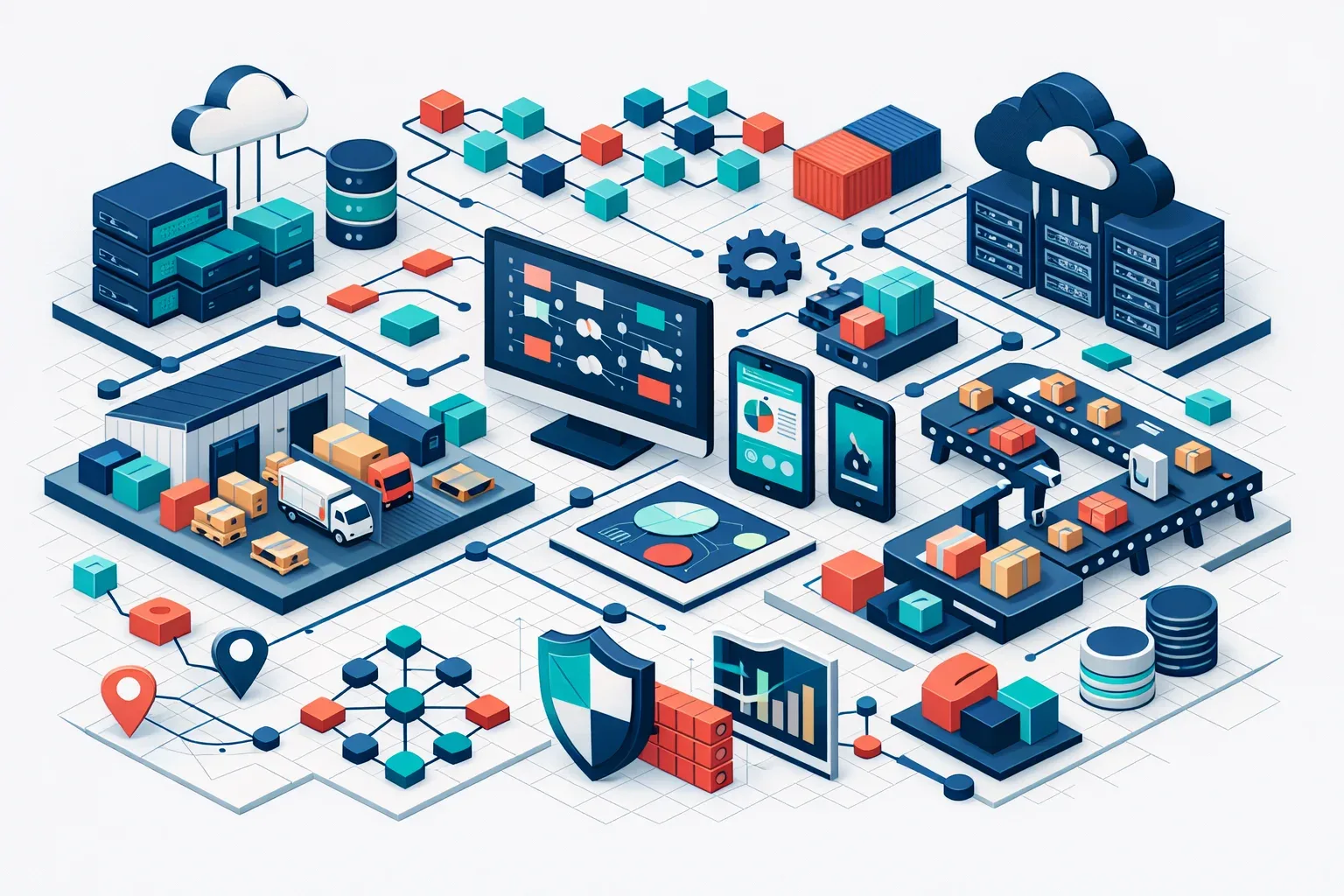
The architecture you choose in month one determines whether your logistics platform gracefully handles 10x load — or collapses under it. This isn’t theoretical. It’s the single highest-use decision in logistics software development, and most teams get it wrong by defaulting to familiar patterns instead of matching architecture to workload characteristics.
Event-Driven vs. Request-Response: A Real Trade-Off
The instinct to build shipment tracking on REST + WebSockets is understandable. It’s simple, well-documented, and every developer on your team already knows it. But request-response architectures hit a wall when you’re processing thousands of concurrent GPS pings, carrier status updates, and ETA recalculations simultaneously.
Event-driven architectures using Kafka + gRPC handle this fundamentally differently. Instead of each service polling for updates, events propagate through a message bus — a carrier scan triggers an inventory adjustment, which triggers a customer notification, which triggers a dashboard refresh, all asynchronously. In production systems we’ve benchmarked, Kafka-based pipelines sustain p99 latencies under 50ms for shipment status propagation, while equivalent REST + WebSocket setups degrade to 300-800ms once concurrent connections exceed roughly 5,000.
| Pattern | Tech Stack | p99 Latency (5K concurrent) | p99 Latency (50K concurrent) | Failure Isolation |
|---|---|---|---|---|
| Request-Response | REST + WebSockets | 120-300ms | 800ms+ (degraded) | Poor — cascading failures |
| Event-Driven | Kafka + gRPC | 30-50ms | 60-90ms | Strong — partitioned consumers |
That said, event-driven isn’t universally superior. For low-volume B2B logistics portals handling under 500 shipments daily, REST is simpler to operate and debug. Choose your architecture based on projected peak load at 18 months, not current volume.
CQRS and Event Sourcing for Order-Inventory Separation
Here’s a pattern we see repeatedly in logistics platforms that survive their first year: separating write-heavy operations (order creation, inventory mutations, scan events) from read-heavy operations (dashboard queries, reporting, analytics). The CQRS pattern — Command Query Responsibility Segregation — gives each side its own optimized data model.
Maersk’s TradeLens platform demonstrated this at container-shipping scale, using event sourcing to maintain an immutable log of every container movement across global trade lanes. Every state change became an event, making audit trails trivial and enabling temporal queries like “where was container MSCU-4728195 at 14:32 UTC on March 3rd?” without complex database archaeology.
For most logistics platforms, you don’t need Maersk’s scale. But the principle holds: your warehouse operator hammering the inventory API with 200 writes per second shouldn’t degrade the CFO’s real-time dashboard loading in under two seconds. CQRS makes that separation structural, not aspirational.
Geospatial Intelligence as a First-Class Concern
Route optimization isn’t a feature you bolt on later. It requires geospatial indexing baked into your data layer from day one. PostGIS remains the workhorse for SQL-based spatial queries, but Uber’s H3 hexagonal grid system has become the standard for hierarchical spatial indexing at scale. Uber Freight’s engineering team published benchmarks showing sub-second route recalculations across 10,000+ waypoints using H3 — performance that traditional lat/long bounding-box queries simply can’t match (Uber Engineering Blog).
If your platform will handle route optimization, fleet tracking, or geofencing, your technology stack selection needs to account for spatial indexing from the architecture phase. Retrofitting PostGIS or H3 into a schema designed around flat address strings is a migration nobody enjoys.
What This Looks Like in Practice
A European 3PL operator we worked with in 2025 was running their entire operation — 40,000 daily orders across three countries — on a legacy PHP monolith with a single MySQL database. Order processing averaged 12 seconds. Carrier API timeouts cascaded into warehouse queue backlogs every afternoon during peak hours.
The migration to a Kotlin microservices stack with Kafka event streaming, CQRS for order/inventory separation, and PostGIS for route calculations took seven months. Order processing dropped to 800ms. More importantly, when they onboarded a fourth carrier integration two months post-launch, it took eight days instead of the three months their old architecture would have required.
That’s the real ROI of architecture decisions in logistics software development — not just faster processing, but compounding returns on every future change. Teams evaluating custom software approaches should model this compounding effect explicitly, because the spreadsheet that only counts initial build cost will always favor the monolith.
How Much Does Logistics Software Development Cost?
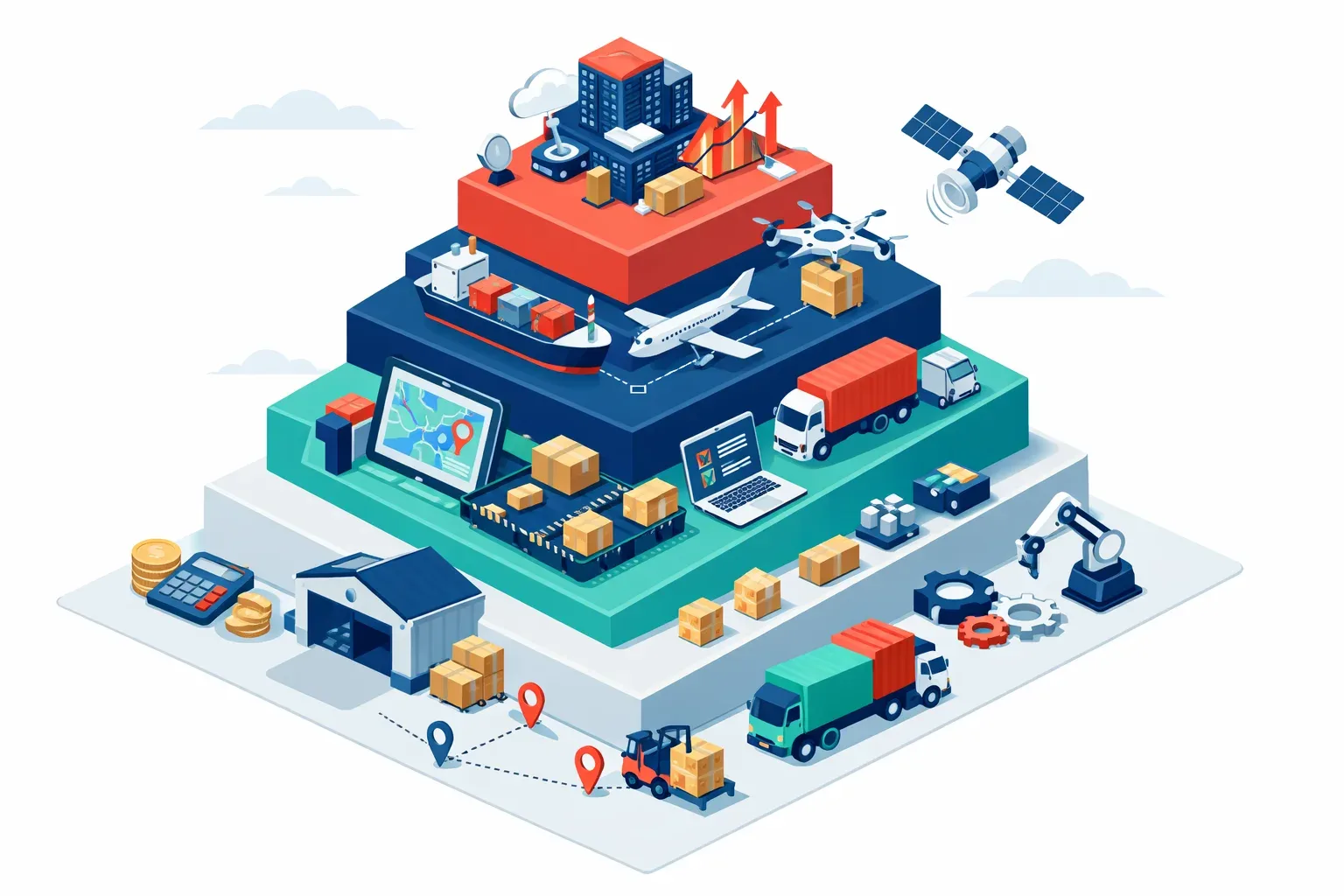
Logistics software development costs range from €80K for a lean MVP to well over €2M for enterprise-grade suites — but the number that actually matters is your three-year total cost of ownership. The upfront build is rarely what kills budgets. It’s the integration complexity, compliance surface area, and operational scaling that compound costs in ways most initial estimates completely miss.
Cost Tiers for Western European Development
| Project Tier | Budget Range | Typical Scope | Team Size | Timeline |
|---|---|---|---|---|
| MVP / Proof of Concept | €80K–€150K | Single-mode TMS, basic route optimization, 1-2 carrier integrations | 3–5 engineers | 3–5 months |
| Mid-Complexity Platform | €200K–€500K | Multi-carrier rate engine, real-time tracking, warehouse sync, compliance for 2-3 markets | 6–10 engineers | 6–12 months |
| Enterprise-Grade Suite | €500K–€2M+ | Full WMS/TMS/OMS with CQRS architecture, Kafka event streaming, PostGIS spatial queries, multi-tenant, multi-region compliance | 12–20+ engineers | 12–24 months |
These ranges align with Statista’s 2025 custom software development pricing data for Western European markets, where senior developer rates sit between €85–€140/hour depending on location.
The Three Cost Multipliers Most Teams Underestimate
Real-time GPS and telematics integration alone can consume 15–20% of your total build budget. Parsing heterogeneous data streams from ELD devices, OBD-II sensors, and carrier APIs — each with different update frequencies and payload formats — is a distributed systems problem, not a simple API call.
Multi-carrier rate engines are the second budget trap. A mid-market shipper working with 8–12 carriers faces rate structures that change quarterly, with surcharge logic varying by lane, weight break, and accessorial. We’ve seen teams budget six weeks for rate engine development and spend six months.
Regulatory compliance modules — customs declarations, hazmat documentation, cabotage rules across EU member states — require ongoing maintenance as regulations shift. A logistics client we worked with in DACH budgeted €40K for compliance and spent €110K in year one alone, largely because Germany’s MautSysG tolling requirements changed mid-build.
Custom Build vs. Commercial: Three-Year TCO
Oracle Transportation Cloud runs approximately €150K–€300K annually in licensing for mid-market deployments. SAP TM’s total cost typically lands between €200K–€500K per year when you factor in S/4HANA infrastructure and consulting. Over three years, that’s €450K–€1.5M — often comparable to a custom build, but with significantly less flexibility to handle non-standard workflows.
The real question isn’t whether custom is cheaper. It’s whether your operational workflows are standard enough for commercial platforms to handle without extensive customization — which, ironically, often costs as much as building from scratch. For a deeper look at structuring these financial decisions, our guide on custom software development cost estimation breaks down the methodology we use across engagements.
What Are the Most Common Mistakes in Logistics Software Projects?

The costliest mistakes in logistics software development aren’t bugs — they’re architectural bets that look reasonable in month three and become irreversible by month twelve.
Mistake #1: Building a Route Optimization Solver from Scratch
This is the single most expensive trap we encounter. A mid-size freight client once committed eight months and roughly €340K to a custom route optimization engine. The team was talented. The math was sound. And the solver still couldn’t match the performance of Google OR-Tools after all that effort — so they ripped it out and integrated OR-Tools in six weeks. Eight months, gone.
Why does this keep happening? Route optimization is a deeply studied operations research problem. Libraries like OR-Tools and OptaPlanner have decades of algorithmic refinement behind them. Your competitive advantage isn’t in the solver itself — it’s in the constraint modeling, the data pipeline feeding it, and the UX that makes dispatchers trust the output.
Mistake #2: Ignoring Offline-First Design
Driver apps and warehouse scanners operate in environments where connectivity is a luxury, not a given. McKinsey’s 2024 supply chain research found that 23% of warehouse environments have unreliable network coverage. Yet most teams design for happy-path connectivity and bolt on offline support later — which means rewriting the entire data synchronization layer. Offline-first isn’t a feature. It’s a foundational architecture decision for mobile app development that has to be made on day one.
Mistake #3: The Compliance Rule Engine Blind Spot
EU freight documentation requirements differ fundamentally from US and APAC standards. Teams that hardcode compliance logic instead of building a dynamic rule engine face 6–12 month delays every time they expand into a new market. We’ve watched two separate platforms stall their APAC launches entirely because customs documentation logic was buried across dozens of service files rather than abstracted into a configurable engine.
The pattern connecting all three mistakes? Teams optimize for speed-to-first-demo instead of resilience across the product lifecycle. The demo always looks great. The production failure eighteen months later is what actually determines your ROI.
Build vs. Buy: A Decision Framework for Logistics Software Development
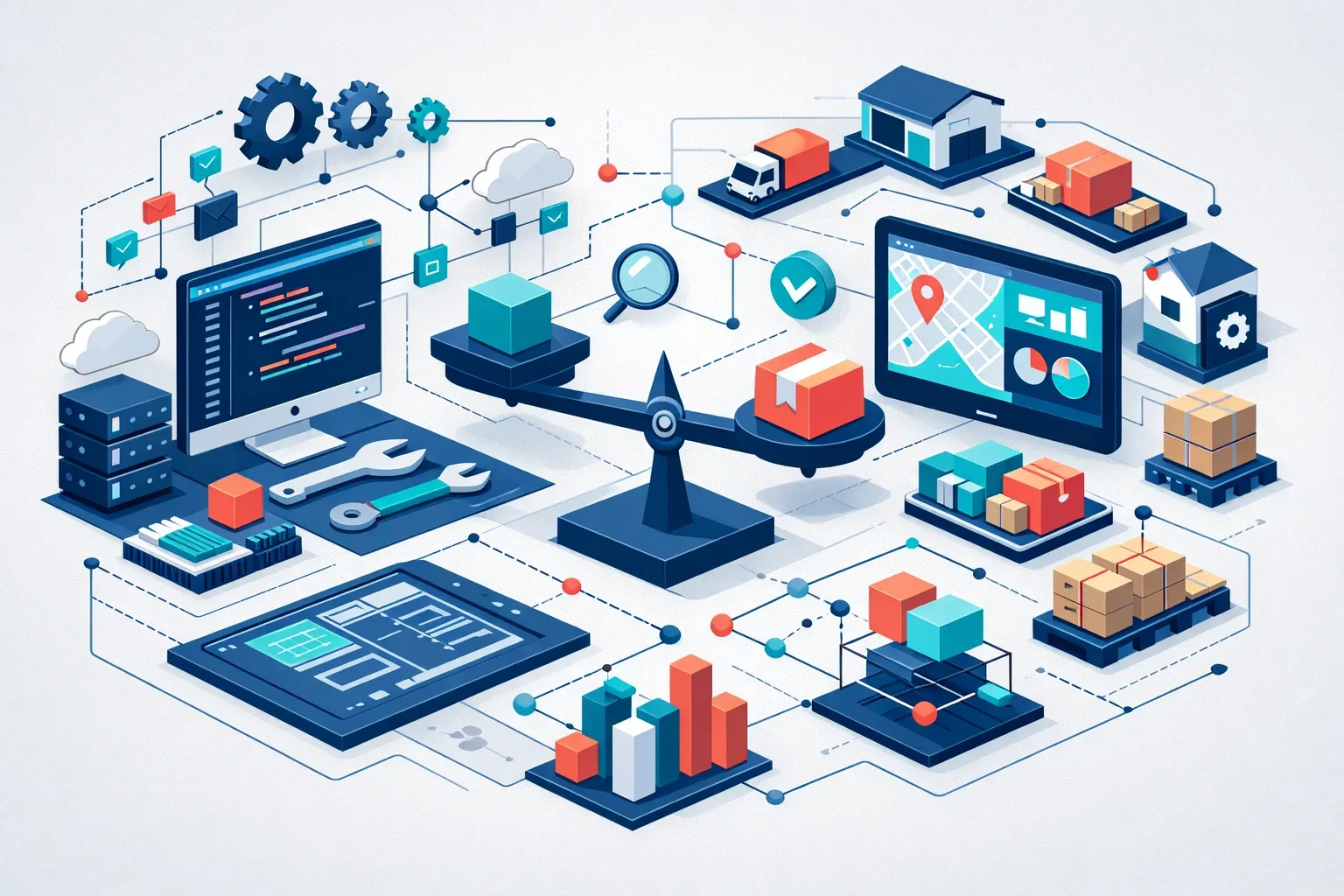
The build-vs-buy question in logistics software development isn’t binary — it’s a spectrum, and most teams land somewhere in the middle whether they plan to or not. Descartes Systems Group’s 2025 industry survey found that 62% of logistics companies running off-the-shelf TMS platforms still needed 30%+ custom development just to wire up their integrations (Descartes 2025 Supply Chain Survey). That’s not a buy decision. That’s a buy-then-build decision with worse architecture control.
The Weighted Decision Matrix
We score every logistics platform engagement against five criteria before recommending an approach. Each carries a different weight because they don’t matter equally:
| Criterion | Weight | Favors Build If… | Favors Buy If… |
|---|---|---|---|
| Operational differentiation | 30% | Routing, pricing, or ETA logic is your competitive edge | Your logistics ops are standard freight/parcel |
| ERP/WMS integration complexity | 25% | You run SAP EWM + legacy middleware + custom EDI | You’re on a modern, API-first stack |
| Data ownership requirements | 20% | Regulatory or contractual mandates (GDPR, client SLAs) | Standard compliance, no data residency constraints |
| Time-to-market pressure | 15% | 6+ month runway before go-live | Need production capability within 8–12 weeks |
| Three-year TCO | 10% | License fees exceed €200K/yr at projected scale | Build estimate exceeds 3x annual license cost |
Operational differentiation gets the heaviest weight for a reason. If your custom software architecture doesn’t encode what makes your logistics operation distinct, you’ve spent build-budget for buy-outcomes.
The Hybrid Blueprint
The smartest logistics platforms we’ve shipped follow one pattern: buy commodity, build differentiators. Concretely, that means commercial platforms handle invoicing, basic shipment tracking, and document generation — functions where custom code adds zero competitive value. Meanwhile, teams invest engineering budget into predictive ETA engines running on event-driven architectures (Kafka + PostGIS), dynamic pricing modules that respond to real-time capacity data, and AI-driven demand forecasting pipelines.
A European 3PL client scored heavily toward build on differentiation and integration complexity but toward buy on time-to-market. Their hybrid: Oracle Transportation Management for carrier settlement, with a custom CQRS-based dispatch optimizer layered on top. Eighteen months in, the custom module processes 40K daily routing decisions — something the off-the-shelf system couldn’t touch.
The scored matrix won’t make the decision for you. But it forces the conversation away from gut feeling and toward the architectural trade-offs that actually determine whether your logistics software development investment compounds or depreciates.
The Architecture Decision Outlasts Every Feature Decision
Logistics software development is, at its core, an architecture problem disguised as a feature problem. The teams that succeed aren’t the ones with the longest feature lists — they’re the ones that matched their architecture to their actual workload characteristics, built integration layers that absorb carrier API chaos instead of breaking under it, and made honest build-vs-buy decisions based on where their competitive differentiation actually lives.
Three things matter more than everything else combined: event-driven architecture for anything touching real-time tracking or inventory, a realistic three-year TCO model that accounts for integration drift, and the discipline to buy commodity capabilities instead of burning six figures rebuilding what already exists.
If your current platform buckles when order volumes spike or a new carrier integration takes months instead of weeks, the problem almost certainly traces back to an architectural decision made early — not a missing feature. Start there. Audit your data flow patterns, your service boundaries, your integration layer. That’s where logistics platforms either compound in value or compound in debt.
The difference between the two is almost always visible by month eighteen.
Written by the editorial team at MyPlanet Design, a Digital Agency / Software Development Company specialising in Custom Software Development & Digital Design.