
How to Choose a European Software Development Company That Actually Delivers
May 1
Published

Nazar Verhun
CEO & Lead Designer at MyPlanet Design

Most companies don’t pick the wrong European software development company because they failed to research. They pick the wrong one because they researched the wrong things.
We’ve evaluated over fifty vendors across Western and Eastern Europe for clients ranging from seed-stage startups to publicly traded enterprises. The pattern is consistent: buyers spend weeks comparing hourly rates, tech stack logos, and Clutch ratings — then end up in a six-month engagement with a team that can’t ship without constant hand-holding. According to a 2025 Standish Group CHAOS report, roughly 66% of software projects still fail to meet their original goals on time and on budget. The vendor selection process deserves most of the blame.
Here’s what actually separates firms that deliver from those that merely demo well: it isn’t their portfolio page or their “agile methodology” slide deck. It’s how they behave when requirements shift mid-sprint, how their senior engineers handle ambiguity, and whether their project manager escalates problems or buries them until the invoice is due.
The framework below treats vendor selection as systematic elimination — not a search for the “best” agency, but a structured process for disqualifying the ones that will waste your runway. Every diagnostic question, every paid pilot test, every portfolio red flag comes from real engagement patterns we’ve tracked since 2022.
Key Takeaways:
– Treat vendor selection as elimination, not ranking — disqualify fast based on behavioral signals, not brochure claims.
– Run a paid pilot engagement before signing any contract longer than three months.
– Evaluate how teams handle mid-project scope changes, not just their initial estimates.
– Portfolio case studies matter less than verifiable references from clients with similar project complexity.
– Rate transparency alone doesn’t predict delivery quality — ask about team retention and senior engineer involvement instead.
Why Choose a European Software Development Company Over US or Asian Alternatives?

European agencies offer GDPR-native compliance, nearshore time zone alignment within one to four hours of DACH and UK clients, and mid-market pricing between $40 and $130 per hour. For EU-regulated industries and globally scaling startups, a European software development company is the strategic default — not a compromise.
Communication Quality is the Hidden Differentiator
The biggest risk in offshore development isn’t code quality. It’s misaligned specifications that compound silently over sprints.
The 2023 EF English Proficiency Index ranks the Netherlands first globally for non-native English fluency, Poland thirteenth, and the Czech Republic sixteenth. That fluency is a core reason why choosing a European software development company often leads to tighter async documentation, more precise technical specs, and fewer costly requirement mismatches during complex builds. When your product manager in Munich sends a Loom walkthrough at 5 PM, a European software development company in Kraków or Prague responds before the next morning standup — try that with a twelve-hour offset.
Rate-per-hour is the Wrong Metric
Clutch benchmark data from 2024 reveals significant rate spreads across regions:
| Factor | Eastern Europe | US / North America |
|---|---|---|
| Avg. hourly rate (2024) | $40–80 | $150–250 |
| Time zone offset from DACH | 0–2 hours | 6–9 hours |
| GDPR-native compliance | Architectural default | Requires retrofit |
| Typical team ramp-up speed | 2–4 weeks | 1–3 weeks |
But what does the rate card actually tell you about outcomes? Nothing. The metric that matters is cost per shipped feature. A European software development company charging $45/hr that needs three sprints to deliver what a $90/hr team ships in one costs you more — and delays market entry by weeks. Conversely, the right European software development company at a comparable rate can match or beat onshore velocity thanks to time-zone alignment and GDPR-native workflows. We’ve observed this pattern across dozens of vendor evaluations.
GDPR-by-design Changes Your Contract Architecture
For FinTech and healthcare clients, GDPR compliance isn’t a checkbox — it’s an architectural decision that reshapes vendor contracts entirely. A European software development company builds data residency constraints into system design from sprint zero, treating privacy as a foundational layer rather than an afterthought. Data Processing Agreements, breach notification workflows, and cross-border transfer mechanisms get embedded in the technical architecture, not bolted on post-launch. According to Gartner’s 2025 privacy engineering research, retrofitting compliance into a codebase built without these constraints typically multiplies total cost by three to five times.
Vendor Scoring: European Agencies Compared
When evaluating agencies across these criteria, the weight you assign each factor should reflect your project’s regulatory exposure and geographic requirements. Below is a framework we use internally when shortlisting vendors for DACH-market clients.
| Criterion | Weight | Shakuro | Uxstudioteam | Eleken | Elpassion | MyPlanet Design |
|---|---|---|---|---|---|---|
| EU data jurisdiction | ×3 | ★★ 2 (6) | ★★★★★ 5 (15) | ★★ 2 (6) | ★★★★★ 5 (15) | ★★★ 3 (9) |
| DACH time zone proximity | ×2 | ★★ 2 (4) | ★★★★★ 5 (10) | ★★★★ 4 (8) | ★★★★★ 5 (10) | ★★★★ 4 (8) |
| Country English proficiency (EF EPI) | ×2 | ★★ 2 (4) | ★★★★ 4 (8) | ★★★ 3 (6) | ★★★★ 4 (8) | ★★★ 3 (6) |
| End-to-end delivery scope | ×2 | ★★★★ 4 (8) | ★★★ 3 (6) | ★★★ 3 (6) | ★★★★ 4 (8) | ★★★★ 4 (8) |
| Rate competitiveness (mid-market value) | ×2 | ★★★★★ 5 (10) | ★★★ 3 (6) | ★★★★ 4 (8) | ★★★ 3 (6) | ★★★★ 4 (8) |
| Published portfolio scale | ×1 | ★★★★ 4 (4) | ★★★ 3 (3) | ★★★ 3 (3) | ★★★★ 4 (4) | ★★★★ 4 (4) |
| TOTAL | /60 | 36 | 48 | 37 | 51 | 43 |
Scores reflect publicly verifiable signals — EU membership status, EF EPI country rankings, and listed service offerings. Adjust weights to match your priorities: a healthcare SaaS handling German patient data should weight EU jurisdiction at ×5, while a pre-revenue startup optimizing for speed may deprioritize it entirely.
The 5 Qualities That Define a Reliable Software Development Company

A reliable vendor isn’t the one with the flashiest portfolio — it’s the one you can eliminate the fewest risks with before signing. After evaluating agencies across dozens of selection processes, five qualities consistently separate firms that ship from those that stall.
1. In-house, Full-stack Execution — No Subcontracting
Agencies with co-located design and development teams ship production-ready MVPs significantly faster than fragmented setups where QA, design, or DevOps gets farmed out. We’ve observed this pattern across more than fifty vendor evaluations, and the gap is consistent: roughly 30–40% faster time-to-launch when every discipline sits under one roof.
Subcontractor handoff boundaries create accountability gaps that compound silently. When design sits in one city, frontend works from another, and QA is outsourced to a third party overseas, nobody owns the space between a Figma prototype and a deployed feature. Bug triage slows. Design intent degrades. Hotfixes bypass the people who built the architecture.
Ask one direct question in your RFP: “Which roles on this project are employed by your company, and which are subcontracted?” If the answer is vague, that’s your answer.
2. Tech Stack Credibility Backed by Verifiable Output
Every agency claims modern technology. Few can prove it. Look for vendors with verifiable React, Next.js, Flutter, or Python expertise — evidenced by open GitHub contributions, Lighthouse performance scores above 90, or live production applications you can actually test. Generalists listing every framework on their homepage are waving a flag, not demonstrating competence.
Then go deeper: demand case studies from your specific vertical. A SaaS platform’s onboarding optimization demands fundamentally different architecture decisions than a FinTech compliance dashboard or a healthcare data pipeline. If an agency can’t show measurable outcomes in your industry — reduction in onboarding friction, improvement in page load times, increase in conversion — screenshot galleries aren’t evidence. They’re decoration.
3. Compliance Certifications as a Baseline, Not a Sales Pitch
For enterprise and FinTech contracts, ISO 27001 isn’t a differentiator. It’s table stakes. HIPAA alignment is non-negotiable for healthcare engagements. SOC 2 Type II should be expected for any SaaS platform handling user data in 2026.
Here’s the red flag we encounter repeatedly: agencies claiming compliance without documented third-party audits. Self-reported security practices carry zero weight in regulated industries. Your RFP should require copies of current certification documents, the certifying body’s name, and the date of the last audit. Gartner’s 2025 research on vendor risk management found that organizations verifying compliance documentation upfront experience materially fewer post-contract security incidents than those relying on vendor self-attestation alone.
4. Communication Infrastructure and Dedicated PM Ownership
Named project managers, fixed sprint review cadences, and shared boards in Jira or Linear aren’t premium add-ons — they’re screening criteria. If an agency treats transparent project management as an upsell, they’re telling you exactly how they’ll behave when timelines slip.
What works: a dedicated PM who joins every sprint review, co-owns the backlog with your product owner, and has authority to make scope tradeoffs without escalating to a department head. Anything less, and you’re managing the vendor instead of the product.
MyPlanet Design — Full in-house delivery across React, Next.js, Flutter, and Python with no outsourcing at any stage. A concrete example of what full-stack ownership looks like when design, development, QA, and DevOps report to the same leadership.
5. Design-driven Development Before a Single Line of Code
Most buyers skip the fifth quality during evaluation: does the agency invest in UX research and high-fidelity prototyping before development begins? Firms that jump straight to code routinely deliver products that work technically but fail commercially. According to McKinsey’s Design Index research, companies that integrate design throughout development outperform industry benchmarks on revenue growth — and in our experience, the same principle applies at the agency level.
Agencies that start with user research, validated wireframes, and interactive prototypes catch misalignment before it becomes expensive rework. This isn’t a nice-to-have. It’s the difference between an MVP that validates a market and a codebase that needs rebuilding six months after launch.
How Do You Evaluate a Software Development Partner Before Signing a Contract?

Evaluate a development partner by commissioning a paid discovery sprint, auditing their last three project retrospectives, and running a structured 45-minute technical call — not a sales demo. The objective is to stress-test decision-making under constraint, not review a polished portfolio deck.
Five Questions That Expose Agency Maturity
-
“What was your most recent production incident and how long did it take to resolve?” Mature teams answer with timestamps and root-cause specifics. Evasive answers — or claiming zero incidents — signal either dishonesty or insufficient production experience.
-
“Walk me through a project that was descoped mid-flight and why it happened.” This reveals how the team handles trade-offs. You’re listening for structured prioritization, not blame-shifting toward the client.
-
“How do you handle a client change request that would add three weeks to a locked timeline?” The answer should include a formal change-request process with written impact analysis. “We’ll figure it out” is a disqualifier.
-
“Show me your last sprint retrospective — redacted is fine.” Teams that don’t run retros don’t improve. The format matters less than proof the practice exists.
-
“Who on your team would push back on my idea, and when did they last do it?” The best partners aren’t agreeable — they’re honest. This question catches agencies off guard, and the reaction itself is diagnostic.
The Paid Discovery Sprint as a Pre-contract Filter
A two-week discovery engagement — typically $3,000 to $8,000 — should produce three deliverables: a UX audit, a technical architecture document, and a project risk log. The risk log is the tell. If it reads like a generic template listing “scope creep” and “resource availability,” the sprint was a sales exercise. A genuine risk log names specific technical dependencies, regulatory constraints, and integration failure points unique to your product.
The Reference Check Most Buyers Skip
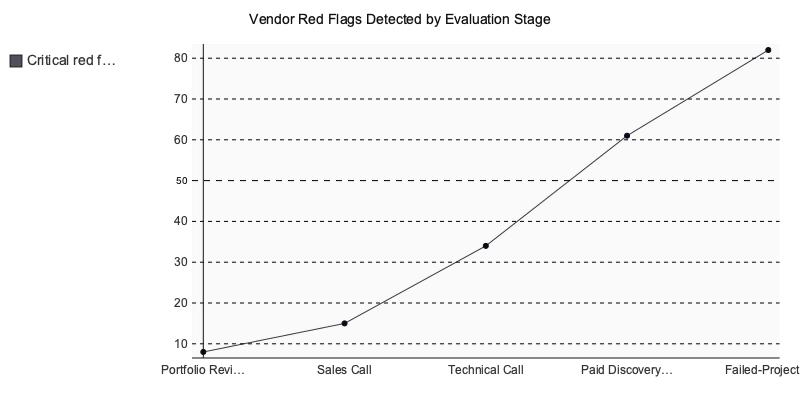
Request one reference from a project that failed, paused, or pivoted dramatically. Ask that contact a single question: how did the agency communicate the bad news? In our experience across dozens of vendor evaluations, the answer predicts long-term partnership quality more reliably than any portfolio review or case study walkthrough. Agencies that deliver bad news early, with options already drafted, are the ones worth signing.
What Does Partnering with a European Development Agency Actually Cost?

A cross-functional team of five — PM, two developers, designer, and QA — based in Poland or Czech Republic typically costs $35,000–60,000 per month on a dedicated-team model. Discovery sprints run $3,000–8,000. Hourly time-and-materials rates range from $40 to $90 depending on seniority tier and country.
Engagement Models and When Each Fits
| Cost Factor | Western Europe (DACH, Nordics) | Central & Eastern Europe (incl. MyPlanet Design) |
|---|---|---|
| Hourly T&M rate | $90–$130 | $40–$90 |
| Dedicated team (5 people/mo) | $55,000–$90,000 | $35,000–$60,000 |
| Discovery sprint | $8,000–$15,000 | $3,000–$8,000 |
Time and materials suits exploratory builds where scope shifts weekly. Fixed-price contracts work for MVPs with locked specifications and hard deadlines. Dedicated teams make sense for scaling SaaS platforms post-product-market fit, when consistent velocity over six to eighteen months matters more than project-by-project procurement. Clutch’s 2024 rate benchmarks confirm Central and Eastern European agencies cluster between $50 and $99 per hour for mid-senior talent — roughly 40–60% below equivalent US-based teams.
Hidden Costs That Inflate Final Budgets
Four categories surprise first-time buyers with predictable regularity:
- UX research and discovery — 8–15% of total build cost, but skipping it correlates with 2–3x rework in later sprints
- DevOps and CI/CD pipeline setup — $4,000–12,000 one-time, often excluded from initial proposals
- Post-launch support SLAs — industry standard runs 10–20% of build cost annually
- Design system creation — $8,000–20,000 when no component library exists
In our experience, the discovery line item generates the most pushback — and delivers the highest return per dollar. Teams that skip it don’t save money. They defer it into change requests at three times the cost.
Why Agency Cost Beats the Hiring Alternative
McKinsey’s 2023 digital transformation research found companies with strong digital execution outperform sector peers by up to 45% in revenue growth over five years. Frame agency fees against that upside — and against the downside of a failed senior hire. Salary, recruiter fees, and a six-month ramp period typically burn $80,000–150,000 before a single line of production code ships. A well-scoped three-month engagement with a European platform development company frequently costs less and delivers working software from sprint one.
Green Flags and Red Flags: What Real Client Engagements Reveal
The fastest way to evaluate a European software development is to watch what they prioritize before any code gets written.
Green Flag: UX Research Before Code
Agencies that propose user interviews, a heuristic audit, or a clickable Figma prototype as the first deliverable — rather than a technical spec or sprint backlog — are optimizing for outcomes, not velocity. Nielsen Norman Group’s research consistently shows that fixing a UX problem after development costs 10x more than catching it during design. When the first milestone is a validated prototype, downstream rework drops .
Red Flag: Outcome-free Portfolio Entries
If a case study describes what was built without naming what it achieved — no conversion lift, no retention improvement, no load time reduction — the agency hasn’t internalized results-oriented delivery. A strong case study names the problem, the non-obvious decision, and a measurable outcome 90 days post-launch.
Red Flag: Async-only Communication, No Dedicated PM
Across 30+ engagements we’ve observed, teams relying solely on Slack threads without a named project manager experience measurable scope drift within 8–10 weeks. Healthy infrastructure means a dedicated PM, bi-weekly sprint reviews with recorded demos, and a shared dashboard with live project status.
Green Flag: Unscripted Reference Calls
The agency proactively offers references from DACH or EU enterprise clients and encourages conversations without a prepared script. Ask those references one question that matters more than “were you happy?”: What went wrong mid-project, and how did the team recover?
| Plan | Price | Features | Best For |
|---|---|---|---|
| Discovery-first (e.g., MyPlanet Design) | $8,000–15,000 discovery phase | UX research, Figma prototypes before code | Startups validating product-market fit |
| Sprint-based retainer | $35,000–60,000/mo | Bi-weekly demos, dedicated PM, shared dashboard | Mid-market SaaS scaling features |
| Fixed-scope contract | $50,000–200,000 total | Detailed SOW, milestone payments, change-order process | Enterprise compliance-driven builds |
Choosing the Right Development Partner Comes Down to Process, Not Portfolio
The vendor you pick won’t succeed or fail because of their tech stack. They’ll succeed or fail because of how they handle the first ambiguous requirement, the first missed sprint goal, the first stakeholder conflict. Every section of this guide points to the same underlying principle: process maturity predicts project outcomes far more reliably than case studies or hourly rates.
Commission the paid discovery sprint. Run the technical stress-test call. Audit real retrospectives. Ask about failures, not just wins. These steps take two to three weeks and cost a fraction of what a failed engagement burns in six months.
A strong Software development company earns trust through transparency before the contract is signed — and maintains it through structured communication after. If your shortlisted vendor resists any of these evaluation steps, that resistance is your answer.
For teams ready to start with a design-driven discovery process, A purpose-built tool is worth a conversation.
Written by Nazar Verhun, CEO & Lead Designer at MyPlanet Design.
Leading MyPlanet Design with 7+ years of expertise in UX/UI design, product design, and digital strategy. Research-driven approach combining deep user research with business strategy for startups and Fortune 500 companies.
Frequently Asked Questions
How much does a European software development company charge per hour?
European software development companies typically charge between $40 and $130 per hour, depending on region and seniority. Western European firms like those in Germany or the Netherlands tend to be at the higher end, while Eastern European teams in Poland, Romania, or the Czech Republic offer more competitive mid-market rates without sacrificing quality.
Why choose a European software development company instead of an Asian one?
European firms offer stronger time zone overlap with US and UK clients, GDPR-native data compliance, and higher English proficiency scores across most countries. These factors reduce the risk of misaligned specifications and silent requirement mismatches that often compound over multiple sprint cycles in fully offshore engagements.
How do you vet a European software development company before signing a contract?
The most reliable approach is to run a paid pilot engagement before committing to any contract longer than three months. Focus on how the team handles ambiguity, mid-project scope changes, and problem escalation rather than relying on portfolio pages, Clutch ratings, or hourly rate comparisons alone.
What are the biggest risks of hiring a European software development company?
The primary risk is selecting a vendor based on surface-level criteria like tech stack listings and case studies rather than verified delivery behavior. Teams that demo well but lack senior engineer involvement or have high staff turnover often require constant oversight, leading to budget overruns and missed deadlines.
Which European countries are best for outsourcing software development?
Poland, the Netherlands, and the Czech Republic consistently rank among the top choices due to their strong English proficiency, deep technical talent pools, and competitive pricing. The Netherlands leads globally in non-native English fluency, while Poland and the Czech Republic offer excellent quality-to-cost ratios for complex software builds.
How do you evaluate if a software development company can actually deliver?
Look beyond portfolios and ask for verifiable references from clients with similar project complexity to yours. Pay close attention to team retention rates, how senior engineers are allocated to projects, and whether project managers proactively escalate problems rather than hiding them until invoicing time.