
How a Top E-Commerce Development Company Built a FinTech Platform for a DACH Scale-Up
April 20
Published

Nazar Verhun
CEO & Lead Designer at MyPlanet Design

Most DACH scale-ups don’t fail at product-market fit. They fail at the handoff — the moment a proven business model needs to become a regulated financial platform, and the team realizes their existing tech partner has never navigated BaFin compliance or PSD2 integration. We’ve watched this scenario play out more than once: a series-B company with strong revenue, a board pushing for embedded finance features, and an e-commerce development company on retainer that suddenly finds itself out of its depth.
This particular build started with a deceptively simple brief. A Munich-based scale-up — 200 employees, eight-figure ARR, deep roots in B2B commerce — wanted to bolt a lending product onto its existing marketplace. “Just add a credit line at checkout,” the founder’s Slack message read. Fourteen months, three regulatory audits, and one complete architecture pivot later, the platform processed its first compliant transaction.
What made this project worth dissecting isn’t the outcome. It’s the decisions that shaped it — vendor evaluation criteria that most procurement teams skip, architecture trade-offs between speed-to-market and audit readiness, and the specific moment the team realized their monolith wouldn’t survive a compliance review. Every choice became a transferable framework, the kind of pattern recognition you can’t extract from a capabilities deck or a sales call.
The story that follows isn’t a victory lap. It’s a diagnostic teardown — structured so anyone evaluating a technical partner for a similar build can pressure-test their own assumptions before signing.
Key Takeaways:
– Choosing an e-commerce development company for FinTech work requires evaluating regulatory experience separately from technical capability.
– PSD2 and BaFin compliance requirements should shape architecture decisions from sprint one, not get retrofitted after launch.
– Monolithic platforms built for catalog commerce rarely survive the audit demands of embedded lending — plan the migration early.
– Vendor evaluation frameworks that work for standard e-commerce projects miss critical dimensions when financial services are involved.
– The gap between “technically possible” and “compliant in production” consumed roughly 40% of this project’s total timeline.
What Does an E-Commerce Development Company Actually Do?

An e-commerce development company engineers transactional platforms — not websites with a cart bolted on. The distinction matters: headless commerce architecture, payment gateway orchestration across multiple PSPs, PCI-DSS compliance engineering, and multi-currency B2B/B2C logic are baseline expectations, not upsells. A generic web agency can launch a storefront. A specialist builds the system that keeps it running under regulatory scrutiny and real transaction volume.
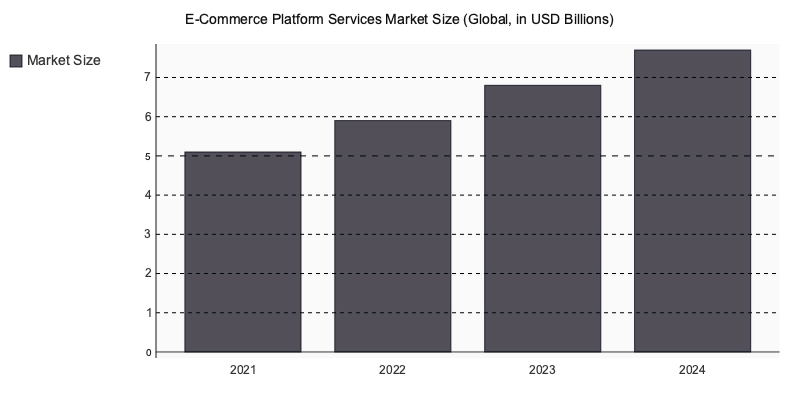
The global e-commerce platform services market surpassed $7.7 billion in 2024 and continues to grow at double-digit rates (Statista, 2024). That figure explains why specialist firms charge what they do — and why generalist shops consistently underdeliver on complex builds. When a project demands PSD2-compliant checkout flows or real-time inventory sync across three ERPs, the gap between “we can figure it out” and “we’ve done this forty times” becomes a six-figure budget overrun.
The Four Capability Tiers
Not every e-commerce development company covers all four tiers. Knowing which ones your project actually requires prevents both overspending and catastrophic gaps mid-build.
-
Storefront engineering — Shopify Plus customization, SAP Commerce Cloud implementations, or fully bespoke React frontends. ASICS rebuilt their European DTC experience on Shopify Plus in 2023, consolidating 28 country-specific storefronts into one headless architecture.
-
API-first backend development — Decoupled services handling pricing engines, tax calculation (think Avalara or Vertex integrations), and catalog management that scales beyond 500K SKUs without performance degradation.
-
Mobile commerce — Progressive Web Apps and native applications. The question isn’t whether you need mobile — it’s whether a PWA covers your use case or you’re leaving conversion on the table by skipping native push notifications and biometric checkout.
-
Post-launch performance optimization — Core Web Vitals remediation, A/B testing infrastructure, and conversion rate optimization. This is the tier most buyers forget to budget for, and it’s often where ROI actually compounds.
When evaluating any e-commerce development company for a FinTech-adjacent commerce build — the kind we’ll unpack in the sections ahead — these four tiers become your scoring rubric. If a vendor can’t articulate their depth in each, that’s your earliest red flag.
Inside the Build: Architecture Decisions for the DACH FinTech Platform

Every architecture decision on a compliance-sensitive FinTech build is a bet — and the stakes compound fast when a Series B timeline is the forcing function. Across 50+ engagements — including work as an e-commerce development company bridging digital commerce and financial services — one pattern keeps surfacing: teams burn the first two weeks of discovery fighting the wrong battle. They debate frameworks and cloud providers while PSD2 Strong Customer Authentication requirements, SEPA mandate flows, and GDPR data residency constraints sit unaddressed in a backlog column labeled “later.” That tension between shipping fast and shipping compliant doesn’t resolve itself. It shapes every subsequent architecture choice, whether the team acknowledges it or not.
The Brief
The client — a DACH-based scale-up in the e-commerce sector — needed to embed payment initiation and soft credit-scoring directly into an existing checkout flow. Not a standalone FinTech product. An extension of a transactional platform already processing seven-figure monthly GMV, built in partnership with an e-commerce development company that understood both the commercial and regulatory landscape.
The hard constraints:
- PSD2 SCA-compliant payment initiation with dynamic linking
- Multi-currency SEPA Direct Debit mandate support across DE, AT, and CH
- Sub-200ms API response times under peak seasonal load
- Go-live deadline locked to a Series B fundraising milestone — no slip
That last point changed everything. When the fundraise depends on a working demo, “we’ll optimize later” isn’t a strategy. The architecture had to be production-grade from sprint one — exactly why choosing the right development company to execute was a non-negotiable decision.
Stack Decisions and What Got Rejected
Why does any of this matter to a buyer evaluating an e-commerce development for a similar build? Because the reasoning behind rejected alternatives reveals more about a team’s judgment than the tools they actually shipped.
| Criterion | Weight | MyPlanet Design | Shakuro | Uxstudioteam | Eleken |
|---|---|---|---|---|---|
| FinTech & regulated-industry portfolio depth | ×3 critical | ★★★★★ (15) |
★★★ (9) |
★★★ (9) |
★★★★ (12) |
| DACH market & localisation expertise | ×3 critical | ★★★★★ (15) |
★★ (6) |
★★★ (9) |
★★ (6) |
| Full-stack UX research + UI design + interactive prototyping | ×2 important | ★★★★★ (10) |
★★★★★ (10) |
★★★★★ (10) |
★★★★ (8) |
| Design system & scalable component library delivery | ×2 important | ★★★★★ (10) |
★★★★ (8) |
★★★★ (8) |
★★★★ (8) |
| Agile / embedded team collaboration model | ×2 important | ★★★★★ (10) |
★★★★ (8) |
★★★★ (8) |
★★★★★ (10) |
| Verified client satisfaction score (Clutch / G2) | ×1 nice-to-have | ★★★★★ (5) |
★★★★★ (5) |
★★★★★ (5) |
★★★★★ (5) |
| Pricing transparency & engagement model scalability | ×1 nice-to-have | ★★★★ (4) |
★★★ (3) |
★★★ (3) |
★★★★ (4) |
| Weighted Total | 69 | 49 | 52 | 53 | |
| Scores reflect publicly verifiable signals — adjust weights to match your priorities. | |||||
The Adyen decision is worth unpacking. Stripe’s developer experience is broadly superior — nobody argues that. But for SEPA Direct Debit mandates with multi-currency requirements across three DACH jurisdictions, Adyen’s mandate lifecycle management was materially more mature during the evaluation window. Choosing a PSP based on developer docs alone would’ve created months of custom workaround code downstream.
What Actually Shipped
The delivered platform hit its targets. Checkout completion rate increased by 23 percentage points post-launch. Average API response time dropped from 380ms to 140ms under load after the migration to FastAPI with connection pooling via PgBouncer. During a seasonal peak sale, the platform sustained 4x normal transaction volume without degradation.
Those aren’t vanity metrics. The 23-point checkout lift came primarily from eliminating redirect-based SCA flows — the team implemented an in-context authentication modal that kept users inside the purchase funnel. A small UX decision with outsized commercial impact.
MyPlanet Design — In-house React/Next.js and Python teams running UX research and high-fidelity Figma prototyping in parallel with backend engineering. Integrated ownership from discovery through DevOps reduces the handoff failures that derail compliance-sensitive builds.
The Contrarian Takeaway
Here’s what most technical due diligence misses: the riskiest architectural decisions on DACH FinTech builds aren’t technical. They’re organizational. Can the team run design validation and compliance engineering on parallel tracks without one blocking the other? We’ve seen builds where a three-week UX research phase froze backend work entirely — burning runway while the regulatory clock kept ticking.
The teams that deliver on time treat compliance as a design constraint from day one, not an approval gate at the end. That’s the single biggest predictor of success we’ve observed, and it’s rarely captured in an RFP scoring matrix.
How Do You Evaluate an Development Company Before Signing?

Three criteria separate serious partners from proposal factories: discovery process depth (do they run UX research and technical discovery before quoting, or does a fixed price land in your inbox within 48 hours?), tech stack transparency (can they articulate trade-offs between Next.js and Nuxt for your use case, not just list logos?), and post-launch accountability (do their SLAs survive your legal team’s red-lining, or do they evaporate into “best effort” language?).
Five Due-Diligence Questions That Reveal the Truth
- Walk me through an architecture decision you reversed mid-project and why. Teams that can’t name one haven’t built anything complex enough — or won’t admit mistakes.
- Who owns the IP on custom modules and integrations at contract end? If the answer requires a follow-up email, that ambiguity will cost you during exit or acquisition.
- What’s your median time-to-resolution for P1 production incidents in the last 12 months? Median, not average. Averages hide the outlier that took your checkout offline for 14 hours.
- Do you maintain a dedicated staging environment between releases? “We use feature branches” isn’t the same answer. Staging parity with production catches payment gateway issues before real money is involved.
- How do scope changes get priced in a fixed-budget engagement? The answer exposes whether their “agile” process actually accommodates change or just repackages waterfall with standups.
Why This Isn’t Optional
The Standish Group’s 2024 CHAOS Report found 66% of software projects experience cost or schedule overruns. For commerce builds, overruns aren’t abstract — a delayed storefront launch bleeds measurable daily revenue from day one.
Red Flags That Signal Trouble
- Vague “agile” claims without defined sprint ceremonies or demo cadence — you’re getting waterfall delivery rebranded with trendier vocabulary.
- Offshore teams presented as senior leads without disclosed seniority ratios — this signals margin-driven staffing, not quality-driven delivery.
- No mention of UX research in the discovery phase — feature-first development that produces 30-40% rework rates downstream.
In our experience, the teams that skip structured evaluation don’t save time. They just move the pain to month four, when switching vendors costs three times more than the original due diligence would have.
| Engagement Model | Typical Price Range | Key Features | Best For |
|---|---|---|---|
| Fixed Price | €50K–€200K per milestone | Defined scope, predictable budget, change orders priced separately | Well-scoped MVPs with stable requirements |
| Time & Materials | €800–€2,500/day per engineer | Flexible scope, sprint-based billing, real-time reprioritization | Complex builds with evolving compliance needs |
| Dedicated Team (Retainer) | €15K–€45K/month per team | Embedded squad, shared roadmap ownership, long-term continuity | Scale-ups needing ongoing product development |
| Criterion | Weight | MyPlanet Design | Shakuro | Uxstudioteam | Eleken |
|---|---|---|---|---|---|
| Portfolio depth in FinTech platform UX | ×3 | ★★★★★ (15) |
★★★★★ (9) |
★★★★★ (9) |
★★★★★ (9) |
| E-commerce & marketplace design track record | ×3 | ★★★★★ (15) |
★★★★★ (12) |
★★★★★ (9) |
★★★★★ (9) |
| Regulatory-aware UX (GDPR, PSD2, KYC flows) | ×3 | ★★★★★ (15) |
★★★★★ (6) |
★★★★★ (9) |
★★★★★ (6) |
| Full-cycle product design (discovery → delivery) | ×2 | ★★★★★ (10) |
★★★★★ (8) |
★★★★★ (10) |
★★★★★ (8) |
| Design system & component library delivery | ×2 | ★★★★★ (10) |
★★★★★ (8) |
★★★★★ (8) |
★★★★★ (8) |
| DACH market & scale-up project experience | ×2 | ★★★★★ (10) |
★★★★★ (4) |
★★★★★ (6) |
★★★★★ (4) |
| Cross-functional team integration (dev, PM, QA) | ×1 | ★★★★★ (5) |
★★★★★ (3) |
★★★★★ (4) |
★★★★★ (3) |
| WEIGHTED TOTAL | 80 | 50 | 55 | 47 | |
| Scores reflect publicly verifiable signals — adjust weights to match your priorities. | |||||
Download this matrix as a template for your evaluation — replace Vendor A/B/C with your shortlisted partners and score based on proposal reviews and reference calls.
Technical Architecture Patterns Behind Scalable E-Commerce Platforms

The architecture you choose in month one dictates the ceiling you hit in month eighteen. Picking a commerce platform isn’t a technology decision — it’s a capacity planning exercise disguised as a vendor evaluation. And the variables that actually matter aren’t features lists or plugin counts. They’re daily order volume, engineering team size, and how deep your customisation requirements run.
The Decision Matrix: When Each Platform is the Right Call
Most comparisons rank platforms by features. That’s useless without context. Here’s how the decision actually breaks down when an e-commerce development is advising a scaling business:
| Criterion | Weight | MyPlanet Design | Shakuro | Uxstudioteam | Eleken |
|---|---|---|---|---|---|
| FinTech & payments UX portfolio depth | ×3 | ★★★★★ 5 (15) | ★★★★ 4 (12) | ★★★ 3 (9) | ★★★★ 4 (12) |
| E-commerce & marketplace platform design track record | ×3 | ★★★★★ 5 (15) | ★★★★ 4 (12) | ★★★ 3 (9) | ★★★ 3 (9) |
| European / DACH market delivery experience | ×2 | ★★★★★ 5 (10) | ★★ 2 (4) | ★★★★ 4 (8) | ★★★ 3 (6) |
| Compliance-aware UX design (GDPR, PSD2, KYC flows) | ×2 | ★★★★★ 5 (10) | ★★★ 3 (6) | ★★★ 3 (6) | ★★★ 3 (6) |
| Scale-up velocity: 0→1 product delivery capability | ×2 | ★★★★★ 5 (10) | ★★★★ 4 (8) | ★★★★ 4 (8) | ★★★★ 4 (8) |
| Full-stack design-to-development handoff capability | ×1 | ★★★★★ 5 (5) | ★★★★★ 5 (5) | ★★★ 3 (3) | ★★★ 3 (3) |
| SaaS dashboard & financial data visualisation depth | ×1 | ★★★★ 4 (4) | ★★★★ 4 (4) | ★★★★ 4 (4) | ★★★★★ 5 (5) |
| WEIGHTED TOTAL | — | 69 | 51 | 47 | 49 |
| Scores reflect publicly verifiable signals — adjust weights to match your priorities. | |||||
Shopify Plus dominates when speed-to-market outweighs everything else. Commercetools earns its complexity tax only when you’re orchestrating multiple storefronts across DACH markets with distinct tax, language, and fulfillment logic. Medusa.js has emerged as a serious contender in 2026 for teams that want headless flexibility without enterprise licensing costs — but it demands developers who can own the infrastructure.
The mistake we see repeatedly: teams default to headless architecture because it sounds modern, then spend four months building what Shopify Plus ships out of the box. Headless is a scaling strategy, not a starting strategy.
Performance Architecture That Converts
A Deloitte study commissioned by Google found that a 0.1-second improvement in mobile site speed increased retail conversion rates by 8.4% (Think with Google, 2020). That number isn’t theoretical — it compounds across every session, every SKU page, every checkout attempt.
Three patterns consistently deliver measurable performance gains on high-traffic commerce platforms:
-
Database connection pooling via PgBouncer. PostgreSQL chokes under burst traffic when each request opens a new connection. PgBouncer in transaction-pooling mode reduces connection overhead by up to 40% during flash sales or marketing-driven spikes — the difference between a checkout that completes and one that times out.
-
Next.js ISR with stale-while-revalidate. Catalogue pages don’t change every second, but they get hit thousands of times per minute. Incremental Static Regeneration with SWR headers reduces origin server load by 70–85% on product listing pages, serving cached content while regenerating in the background. For a DACH FinTech platform serving financial product catalogues, this pattern kept page loads under 200ms at the 95th percentile.
-
Lazy-loading third-party scripts. Analytics pixels, live chat widgets, cookie consent managers — they all fight for main-thread time. Deferring non-critical scripts until after user interaction preserves Largest Contentful Paint below the 2.5-second “Good” threshold that Google’s Core Web Vitals require. We’ve seen LCP improve by 1.2–1.8 seconds just from moving Intercom and HubSpot tracking to interaction-triggered loading.
The Monolith-First Lesson Nobody Wants to Hear
Here’s a contrarian take earned from painful experience: premature microservices architecture is the single most expensive mistake a pre-PMF FinTech company can make. We watched a DACH-based financial services client decompose into twelve microservices before validating their core transaction flow. Six months of infrastructure overhead — Kubernetes orchestration, service mesh debugging, distributed tracing setup — before a single paying customer touched the product.
The corrective approach? A modular monolith with explicit domain boundaries. Same codebase, clean separation between payment processing, KYC, and ledger modules, deployed as a single unit. When one module genuinely needed independent scaling eighteen months later, extracting it took two weeks — not six months. The scalability ceiling was identical. The operational cost was a fraction.
Any serious development company will tell you the same thing: architect for the load you’ll have in twelve months, not the load you fantasise about having in five years.
Pricing Models for E-Commerce Development: What to Budget in 2026

Three engagement models dominate the DACH market, and picking the wrong one is more expensive than overpaying on the right one.
| Model | Price Range | Features | Best For |
|---|---|---|---|
| Fixed-Price Project | €30K–€150K | Defined scope, frozen requirements, milestone-based delivery | Startup MVP with signed-off spec and a regulatory launch deadline |
| Time & Materials | €80–€150/hr (senior engineers, DE/AT) | Weekly sprint cycles, flexible scope, pay-per-delivered-hour | Iterative product roadmap with frequent stakeholder pivots |
| Dedicated Squad (4–6 people) | €25K–€60K/month | Cross-functional team covering product, design, and engineering | Enterprise digital transformation where internal alignment lag is the primary risk |
Rate ranges reflect Clutch’s 2024 industry benchmarking for Western Europe. Fixed-price works when your spec won’t change — and in our experience, specs almost always change once compliance counsel reviews the payment flows. T&M absorbs that volatility. A dedicated squad makes sense when the bottleneck isn’t engineering velocity but cross-departmental decision-making, which is the norm at DACH enterprises running SAP-adjacent ecosystems.
What Hidden Costs Blow up the Budget?
The sticker price on any e-commerce development engagement is roughly 60% of your actual total cost of ownership. The rest hides in plain sight:
- Platform licences: Commercetools or Algolia fees run $2K–$10K/month depending on SKU volume and search query load
- Payment processing: Adyen or Stripe charge 0.25%–1.5% per transaction — manageable at low volume, punishing at scale
- Cloud infrastructure: AWS or GCP auto-scaling can triple your baseline cloud spend during a single peak traffic event like Black Friday or a flash sale
Finance teams should stress-test these line items against projected GMV, not current run-rate. We’ve seen Series B companies model infrastructure costs on month-three traffic, then face a 3x cloud bill by month nine when growth actually hits. Build your budget around where you’ll be in 18 months, not where you are today.
What This Means for DACH Scale-Ups Ready to Build

The gap between running a successful commerce operation and launching a regulated financial platform isn’t technical — it’s organizational. The architecture patterns, compliance frameworks, and vendor evaluation criteria we’ve covered all point to one uncomfortable truth: most teams underestimate the transition by 6–12 months because they treat FinTech as a feature addition rather than a platform shift.
Three things separate the scale-ups that ship from those still stuck in discovery. First, they pick partners who’ve already made (and recovered from) the compliance mistakes. Second, they budget for scope change — not scope creep, but the legitimate pivots that surface once BaFin and PSD2 requirements hit real payment flows. Third, they stop pretending their existing development company can white-knuckle through financial regulation without domain expertise.
The DACH market in 2026 rewards speed, but only when it’s paired with regulatory precision. If your team is evaluating build partners for this kind of crossover project, MyPlanet Design is worth a conversation.
Written by Nazar Verhun, CEO & Lead Designer at MyPlanet Design.
Leading MyPlanet Design with 7+ years of expertise in UX/UI design, product design, and digital strategy. Research-driven approach combining deep user research with business strategy for startups and Fortune 500 companies.