How to Choose a UX Design Agency in Germany: What High-Growth Companies Get Right
April 25
Published

Nazar Verhun
CEO & Lead Designer at MyPlanet Design

Most companies searching for a ux design agency germany start with the same Google query and end up on the same listicles — ten agencies ranked by portfolio prettiness, zero mention of whether they’ve ever navigated a BaFin audit or built interfaces compliant with BITV 2.0. That’s how you end up six months into a product engagement with an agency that designs beautiful screens nobody in your compliance department will approve.
We’ve vetted and worked alongside dozens of UX partners across the DACH region over the past decade, and the pattern is consistent: the companies that scale fastest don’t pick agencies based on Dribbble shots or client logos. They ask questions most buyers never think to ask — about GDPR-aware research consent flows, about how the agency handles the gap between EN 301 549 and Germany’s own accessibility enforcement, about whether their discovery process accounts for the fact that German enterprise users expect fundamentally different information density than US audiences.
Here’s what makes the German market genuinely different from hiring a UX agency in London or New York: regulatory surface area. A fintech product targeting German users isn’t just “a fintech product with German copy.” It’s a product where every tooltip, every data display, every onboarding step exists inside a compliance envelope that shapes layout decisions at the wireframe stage. Agencies that don’t internalize this burn your runway on redesign cycles.
The vetting framework below comes from patterns we’ve observed across real engagements — not theoretical checklists. It covers DACH-specific criteria that generic comparison articles skip entirely, alongside 2026 pricing benchmarks and a red-flag checklist that would’ve saved several teams we know a painful agency switch mid-project. Whether you’re evaluating your first ux design agency in Germany or replacing one that underdelivered, these benchmarks apply.
Key Takeaways:
– Generic agency comparisons ignore DACH-specific requirements like BITV 2.0 accessibility, BaFin-aware interface constraints, and GDPR-compliant UX research practices — these should be non-negotiable in your evaluation criteria.
– The best UX design agencies in Germany embed regulatory awareness into wireframes and prototypes, not as a retroactive compliance review after visual design is locked.
– German enterprise users expect higher information density and different interaction patterns than anglophone markets — your agency must demonstrate localized user research experience, not just translation capability.
– Pricing for senior UX work in Germany ranges from €120–€180/hour in 2026, and agencies quoting significantly below that are likely subcontracting offshore without telling you.
– Red flags include agencies that can’t name a specific BITV 2.0 requirement, treat accessibility as a separate workstream, or show no evidence of testing with German-speaking users during discovery.
What Makes a Strong UX Design Agency in Germany?

A strong ux design agency germany demonstrates mastery across four non-negotiable capabilities: rigorous UX research methodology, mature interaction design practice, rapid prototyping cycles, and seamless developer handoff. Nielsen Norman Group’s UX maturity model provides the baseline framework — but in the German market, maturity means something different than in San Francisco or London.
Germany’s ICT market exceeded €200 billion in revenue in 2024, making it Europe’s largest (Statista, 2024). That scale fuels demand for a specialized ux design agency germany can rely on — not generalist dev shops that bolt on “UI/UX” as a line item.
But which type of agency actually fits your stage? Buyers routinely confuse two different models.
| Feature | Boutique UX Studio | Full-Service Digital Agency |
|---|---|---|
| UX Research Depth | Deep, often academic-grade methods | Integrated with product strategy and engineering |
| Prototyping Speed | High-fidelity screens in days | End-to-end flows delivered within sprint cycles |
| Developer Handoff | Figma specs with limited engineering input | Direct designer-to-developer pipelines with shared tooling |
| Post-Launch Support | Typically project-based engagement | Continuous product teams with iteration loops |
Why DACH-Specific UX Expertise Isn’t Optional
German users expect precision. That’s not a cultural stereotype — it’s a design constraint. GDPR-by-design means consent flows aren’t afterthoughts; they’re core UX architecture. BITV 2.0 accessibility compliance shapes every form field, modal, and navigation pattern. And if you’re building in regulated verticals like FinTech, your UX design agency in Germany needs to understand how BaFin requirements translate into actual interface decisions — not regulatory checkbox exercises.
Across 20+ product engagements, we’ve observed a consistent pattern: teams that skipped structured UX research in sprint one burned through 2–3x more redesign cycles after launch. Front-loading discovery — user interviews, task analysis, competitive audits — isn’t slower. It’s faster, because you’re not rebuilding screens your compliance team rejected or your users couldn’t navigate.
The best UX design agencies in Germany don’t just design interfaces. They design within constraints most international competitors don’t even know exist.
How Do UX Design Agencies in Germany Compare to Global Competitors?

German UX partners aren’t competing in a vacuum. Five distinct agency models serve the DACH market, and each brings a different trade-off profile. McKinsey’s Business Value of Design report found that design-led companies outperformed the S&P 500 by 211% over ten years (McKinsey, 2018). That kind of delta means the agency you select doesn’t just shape your product — it shapes your revenue trajectory.
The Five Models, Compared
| Feature | Boutique German Studios (e.g., SinnerSchrader) | Mid-Size EU Agencies (e.g., Eleken, UX Studio) | Global Design-Dev Firms (e.g., Clay, Netguru) | Talent Networks (e.g., Toptal) | Offshore-Heavy Shops |
|---|---|---|---|---|---|
| UX Research Depth | Deep, localized panels | Moderate, often remote-first | Varies by office | Depends on individual | Surface-level or skipped |
| DACH Cultural Fluency | Native | Partial (often CEE-based) | Low unless German office staffed | Inconsistent | Minimal |
| Delivery Speed | Moderate (thorough) | Fast | Fast at scale | Variable | Fast but revision-heavy |
| Pricing Transparency | High (German contracting norms) | Moderate | Often opaque retainers | Hourly, clear | Low-cost, scope creep risk |
| Regulatory UX (BaFin, BITV) | Strong | Rare | Rare unless specialized | No institutional knowledge | Almost never |
Why DACH Fluency Isn’t a Nice-to-Have
Here’s what actually goes wrong. A B2B SaaS team runs user testing with a US-based agency partner. The research sessions surface insights that make perfect sense for American purchasing behavior — self-serve onboarding, aggressive upsell modals, minimal human touchpoints. Then the product launches in DACH, and enterprise buyers in Munich and Zurich bounce during onboarding because the flow feels pushy and lacks the Ansprechpartner (dedicated contact) expectation baked into German B2B culture.
We’ve seen this pattern repeatedly. Teams that switch to a DACH-fluent research partner and rerun discovery with localized panels typically cut onboarding drop-off by a third or more within two testing cycles. The issue was never the interface quality — it was cultural misalignment in the research itself.
For regulated sectors like FinTech, the gap widens further. German user testing panels understand Datensparsamkeit instincts. DACH-based agencies build personas informed by local purchasing behavior — the Mittelstand procurement committee, the Geschäftsführer who signs off personally. Offshore shops rarely model these dynamics, which means their wireframes solve the wrong problems elegantly.
MyPlanet Design — End-to-end UX research and product development with native DACH fluency, from localized user testing to BaFin-aware interface design across web and mobile.
Weighted Scoring Matrix: Evaluate Your Options
| Criterion | Weight | MyPlanet Design | Shakuro | Uxstudioteam | Eleken |
|---|---|---|---|---|---|
| Portfolio depth in SaaS & digital product UX | ×3 | ★★★★☆ 4 (12) | ★★★★☆ 4 (12) | ★★★★★ 5 (15) | ★★★★★ 5 (15) |
| UX research & discovery methodology | ×3 | ★★★★★ 5 (15) | ★★★☆☆ 3 (9) | ★★★★★ 5 (15) | ★★★☆☆ 3 (9) |
| Germany / DACH market & regulatory familiarity | ×2 | ★★★★★ 5 (10) | ★★☆☆☆ 2 (4) | ★★★☆☆ 3 (6) | ★★☆☆☆ 2 (4) |
| Transparent pricing & flexible engagement model | ×2 | ★★★★☆ 4 (8) | ★★★☆☆ 3 (6) | ★★★★☆ 4 (8) | ★★★★★ 5 (10) |
| Scale-up & high-growth company track record | ×2 | ★★★★☆ 4 (8) | ★★★★☆ 4 (8) | ★★★★☆ 4 (8) | ★★★★☆ 4 (8) |
| Public case study depth & measurable outcomes | ×1 | ★★★★☆ 4 (4) | ★★★★☆ 4 (4) | ★★★★★ 5 (5) | ★★★★☆ 4 (4) |
| Design system & developer handoff standards | ×1 | ★★★★☆ 4 (4) | ★★★★☆ 4 (4) | ★★★★☆ 4 (4) | ★★★★★ 5 (5) |
| Weighted Total | — | 61 | 47 | 61 | 55 |
| Scores reflect publicly verifiable signals — adjust weights to match your priorities. | |||||
Download this matrix as a template for your evaluation.
The scores shift depending on your context — a pre-revenue startup optimizing for speed might weight delivery at x3 and regulatory knowledge at x1. But for any company selling into regulated German verticals in 2026, cultural and compliance fluency aren’t line items you can deprioritize. They’re the criteria that determine whether your product actually converts in-market or just looks good in a pitch deck.
What Does Working with a UX Design Agency in Germany Actually Cost?

Expect daily rates between €650 for junior designers at boutique studios and €2,200+ for senior strategists at consultancy-tier firms like Ergosign or Edenspiekermann. Blended averages are misleading — what matters is the engagement model you’re buying into.
Three Engagement Models and What They Actually Run
| Engagement Type | Typical Duration | Cost Range (DACH, 2024–2026) |
|---|---|---|
| Discovery Sprint | 3–4 weeks | €10K–€22K |
| End-to-End Product Design | 3–6 months | €45K–€130K |
| Ongoing Design Retainer | Monthly | €6K–€16K/month |
Discovery sprints deliver user research, validated personas, and a clickable prototype. End-to-end engagements cover the full arc from strategy through developer handoff with design system documentation. Retainers suit companies shipping continuously — you’re buying embedded capacity, not project milestones.
These ranges align with publicly listed pricing from agencies like UX&I and Cobe, who disclose rate cards and engagement structures on their websites. The wide spread reflects seniority mix and whether GDPR-compliant research recruitment is handled in-house or outsourced.
Two Pricing Red Flags That Predict Poor Outcomes
-
Fixed scope without paid discovery. Any agency quoting a full project fee before conducting research is pricing to their assumptions, not your users. We’ve seen this pattern lead to two or three costly redesign cycles that erase whatever discount the fixed quote promised.
-
Bundled UX and development with no separable design deliverables. If you can’t review and approve Figma files, research findings, or interaction specs independently before build begins, you’ve lost your use. Design work should be inspectable and portable — full stop.
The cheapest proposal rarely produces the cheapest outcome. How an agency structures its pricing tells you more about their process maturity than their hourly rate ever will.
How to Vet a UX Design Agency in Germany Before You Sign

The difference between a productive agency relationship and a six-figure lesson in regret usually comes down to what you asked — and didn’t ask — during the selection process. Here’s the vetting framework we’ve refined across dozens of DACH-region engagements.
The 6-Step Vetting Checklist
-
Vertical-specific portfolio depth. Don’t settle for generic case studies. If you’re in FinTech, ask for projects where the agency navigated BaFin-adjacent constraints. A healthcare company should see HIPAA- or DiGA-compliant interface work. Visual polish tells you nothing about domain fluency.
-
Documented UX research methodology. Ask to see a sanitized user testing report — not a Behance walkthrough, not a slide deck of final screens. You want affinity diagrams, usability test scripts, and synthesis artifacts. If they can’t produce one, that’s your answer.
-
Figma prototyping workflow and handoff transparency. Request access to a sample Figma file from a past project. How are components structured? Are design tokens defined? Is the dev handoff annotated or is it a flat PNG dump disguised as a prototype?
-
GDPR and BITV 2.0 compliance track record. Can they walk you through how they handled consent flows in a past project? Have they built interfaces tested against WCAG 2.1 AA? In Germany, accessibility isn’t a nice-to-have — it’s heading toward legal obligation for many digital products by mid-2025 onward.
-
Post-handoff support and developer collaboration model. The best agencies don’t vanish after delivery. Ask how they handle design QA during development sprints and whether they offer iterative support post-launch.
-
Reference check with a comparable past client. Same industry, similar company size. A reference from a 500-person enterprise means little if you’re a 30-person Series A startup.
Why Research Documentation Beats Portfolio Beauty
Here’s the contrarian take most buyers don’t want to hear: the single most reliable signal of UX process maturity isn’t the portfolio — it’s the research paper trail. An agency that produces stunning visuals but can’t show you a sanitized usability report or affinity map is, in our experience, running on aesthetic intuition rather than evidence. We’ve seen teams choose agencies based on award-winning Behance profiles only to discover the “research phase” consisted of a single stakeholder interview and a mood board.
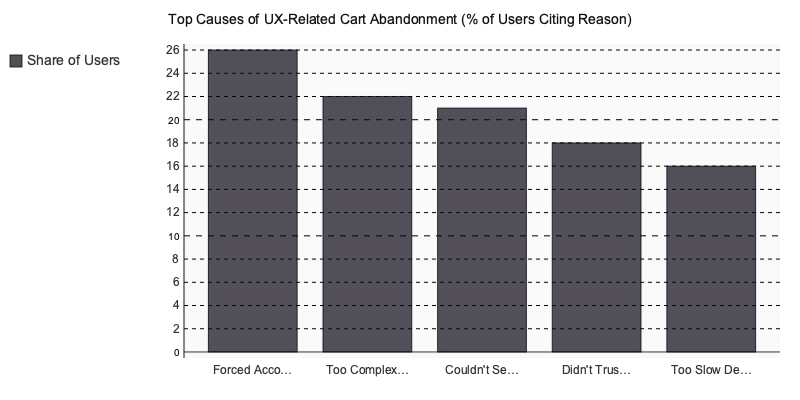
The financial stakes back this up. Baymard Institute’s ongoing research shows that the average online cart abandonment rate sits at 70.19%, with poor UX — confusing checkout flows, lack of trust signals, forced account creation — driving a significant share of that drop-off (Baymard Institute, 2024). Thorough vetting before you sign isn’t perfectionism. It’s risk management.
Skip the checklist, and you’re essentially hiring based on screenshots. That’s not due diligence — that’s shopping.
Industry-Specific UX in Germany: What FinTech, Healthcare, and E-Commerce Buyers Must Know

Regulated industries don’t just need good UX — they need UX that survives legal review. A generalist agency will design a gorgeous investment dashboard and forget that BaFin requires risk disclosures within the same viewport as performance charts, not buried behind a tooltip. That single oversight can stall a product launch by months.
FinTech
BaFin’s supervisory requirements dictate where risk warnings appear in investment product interfaces. The trade-off is real: mandatory disclosure placement directly competes with conversion-optimized layouts. An experienced Germany-based agency knows how to design compliant “suitability assessment” flows that satisfy regulators without creating twelve-screen friction walls. Generalist shops learn this the hard way — usually after the first compliance rejection.
Healthcare
GDPR Article 9 classifies health data as a special category, which forces three concrete UX decisions:
- Consent UI — granular, layered consent screens that separate treatment data from analytics permissions
- Progressive disclosure — medical onboarding flows that collect only what’s needed at each stage
- Data minimization in forms — every field must justify its existence; optional fields for sensitive conditions get flagged in audits
We’ve seen teams ship onboarding forms with fifteen fields when seven would satisfy both clinical and regulatory requirements.
E-Commerce
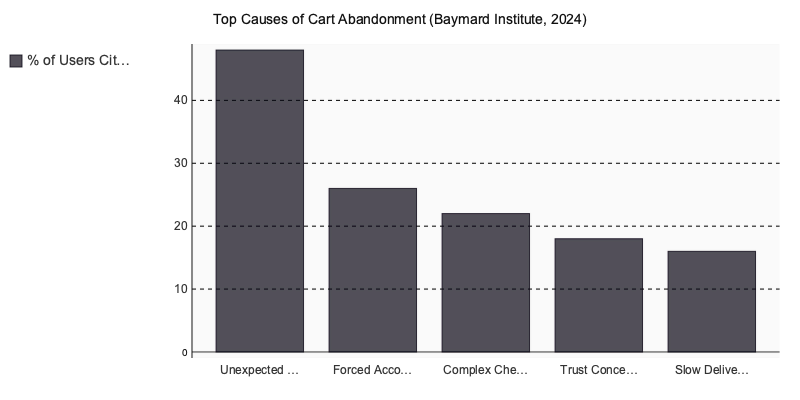
Baymard Institute’s 2024 research documents a 70.19% average cart abandonment rate, driven by unexpected costs, forced account creation, and overly complex checkout flows (Baymard Institute, 2024). A qualified agency should run moderated usability tests against these exact friction points — not generic heuristic reviews.
What Separates a Good Agency Hire from a Great One
Choosing a ux design agency germany isn’t a procurement exercise — it’s a product decision that compounds over years. The companies we’ve seen scale fastest treat agency selection like they’d treat a senior hire: they check regulatory fluency, stress-test the research methodology, and negotiate engagement models that align incentives with outcomes, not hours.
The vetting checklist matters more than the shortlist. Daily rates tell you less than how an agency handles the moment your compliance team rejects their first wireframe. Industry-specific experience — whether that’s BaFin constraints in FinTech or BITV 2.0 in public-sector healthtech — isn’t a nice-to-have. It’s the difference between launching on schedule and burning a quarter on rework.
Start with a paid discovery sprint before committing to a full engagement. Validate the working relationship, the research rigor, and the handoff quality with real deliverables, not pitch decks. If you’re building a digital product that needs to hold up in the German market, MyPlanet Design is worth a conversation.
Written by Nazar Verhun, CEO & Lead Designer at MyPlanet Design.
Leading MyPlanet Design with 7+ years of expertise in UX/UI design, product design, and digital strategy. Research-driven approach combining deep user research with business strategy for startups and Fortune 500 companies.
Frequently Asked Questions
How much does a UX design agency in Germany cost?
Senior UX design work in Germany typically costs between €120 and €180 per hour as of 2026, with full project engagements ranging from €30,000 for smaller scopes to €250,000+ for enterprise platforms. Agencies quoting significantly below this range often subcontract work offshore without disclosure, which can compromise quality and compliance expertise. Fixed-price retainers usually start around €15,000 per month for ongoing product work.
What is BITV 2.0 and why does it matter for UX design?
BITV 2.0 is Germany’s accessibility regulation that mandates digital interfaces meet specific usability standards for people with disabilities, going beyond the broader EU EN 301 549 standard. Any UX agency working on German public-sector or regulated products must design with these requirements baked in from the wireframe stage. Treating accessibility as a post-design audit typically results in costly redesign cycles.
How is hiring a UX agency in Germany different from London or New York?
German UX engagements involve significantly more regulatory surface area, including GDPR-compliant research practices, BITV 2.0 accessibility, and sector-specific rules like BaFin for fintech. German enterprise users also expect denser information layouts and different interaction patterns than anglophone audiences. Agencies that lack DACH-specific experience often underestimate how deeply these factors shape layout and interaction decisions.
What questions should I ask a UX design agency before hiring them?
Ask about specific regulatory experience relevant to your industry, such as concrete BITV 2.0 requirements they have addressed or how they handle GDPR-compliant user research consent. Request examples of testing conducted with native German-speaking users during discovery, not just translated interfaces. Also clarify whether senior designers stay on the project throughout or if work gets handed off to junior staff or offshore subcontractors after kickoff.
What are red flags when choosing a UX agency in Germany?
Major warning signs include agencies that cannot name specific German accessibility or compliance requirements, treat accessibility as a separate optional workstream, or show no evidence of localized user research with German speakers. Be cautious of pricing well below €120/hour for senior work, as this often signals undisclosed offshore subcontracting. Portfolios heavy on visual polish but light on regulated industry case studies are another red flag.
Do UX agencies in Germany handle GDPR compliance in user research?
Strong German UX agencies build GDPR-compliant practices directly into research workflows, including proper consent flows for participant recordings, data minimization in research artifacts, and secure storage of personal data collected during testing. Less experienced agencies often treat GDPR as a legal afterthought, which creates risk when handling participant data across interviews and usability studies. Always confirm how an agency documents and processes research consent before signing.